Fletcher Family Photos | ||
 | | |
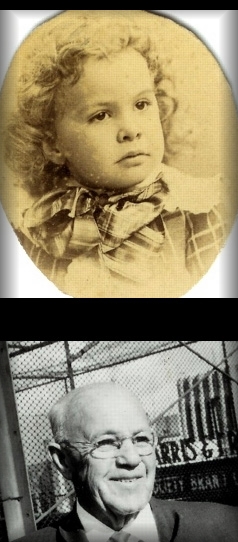 | ||||||||
Images of Bruz's father Stoughton as a boy and an older man. He had 3 sisters, Julia, Hilda and Louisa. Hilda lived in a "boston marriage" in Saranac, New York. Louisa was a poet and had a stormy first marriage to famed playwright Booth Tarkington. Their only daughter Laurel died at age 16 and was one of the first of many tragedies to mark Bruz' s short life. Julia commited suicide in 1910 and a bitter custody battle for her children and body followed. Note that the elder Stoughton is standing on an LA rooftop near Harris & Frank's old Spring Street location. Georgia wonders if the cage could be related to the elevator he operated. A relative comments, "he looks like he's having a good day, and god knows the man lived through his share of horrific ones so it's kind of nice to know he still had that grin in him somewhere after all." | ||||||||
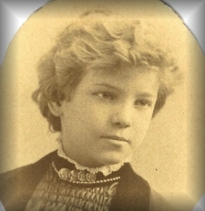 | Bruz's Aunt Hilda as a girl. Later she lived in a "Boston Marriage" meaning she was a lesbian. She was frequently mentionted in the society pages of the Washington Post. | |||||||
| | | | | | | | |
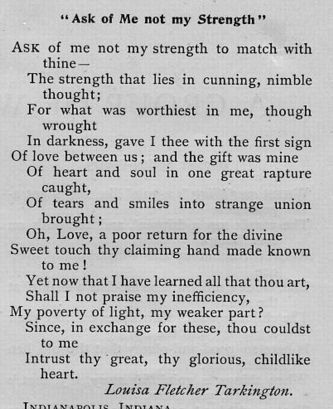 | ||||||
One of Abbess' poems published in 1904. | ||||||
 | ||||||
| | | | | | |
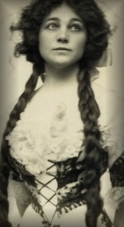
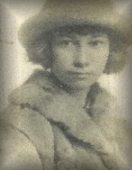
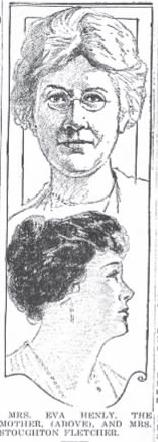
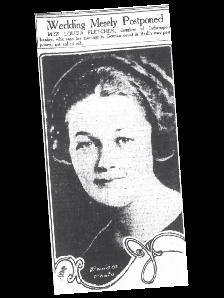
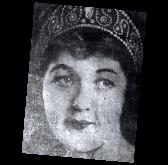
Bruz's beloved aunt Louisa, known to the family as Abbess. The first photo is probably right around the time she graduated from Smith College, in 1900. She met Booth Tarkington when they both appeared in an amateur production in Indianapolis. The second image shows her in costume for that part. She and Booth honeymooned in Lake Maxinkukee. A 1905 article reported that "after a hurried trip through the East he and Louisa Fletcher Tarkington spent the lovely month of October here alone, the long, purple, silent days they gave to rowing, sailing, driving, walking. Then at sundown they donned evening dress (Louisa and decollete creations of the country's best artists) and dined in splendor alone." That same article about the lake resort also stated, "there, also, on its wide veranda, Mrs. Stoughton Fletcher, Jr., of Indianapolis, flirted away many a pleasant Summer afternoon -- when she was May Henley and had not yet married the richest bachelor in Indiana." After the divorce, mother and daughter stayed for a while at Laurel Hall. Bruz and his aunt were very close. | ||
| | |
 | ||||||||||||||||||||||
Laurel, Abbess' oldest child, daughter of Booth. She was only a month older than her cousin Bruz. | ||||||||||||||||||||||
 | ||||||||||||||||||||||
 | ||||||||||||||||||||||
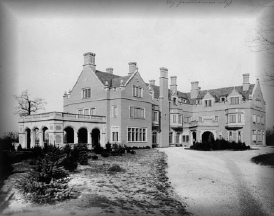
Laurel Hall, 1919. Named after generations of Fletcher women, ironically repossessed by Fletcher Bank in 1923. Bass Photo Co Collection, Indiana Historical Society. | ||||||||||||||||||||||
 | ||||||||||||||||||||||
 | ||||||||||||||||||||||
 | ||||||||||||||||||||||
 | ||||||||||||||||||||||
 | ||||||||||||||||||||||
 | ||||||||||||||||||||||
| | | | | | | | | | | | | | | | | | | | | | |
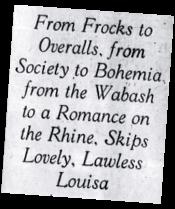
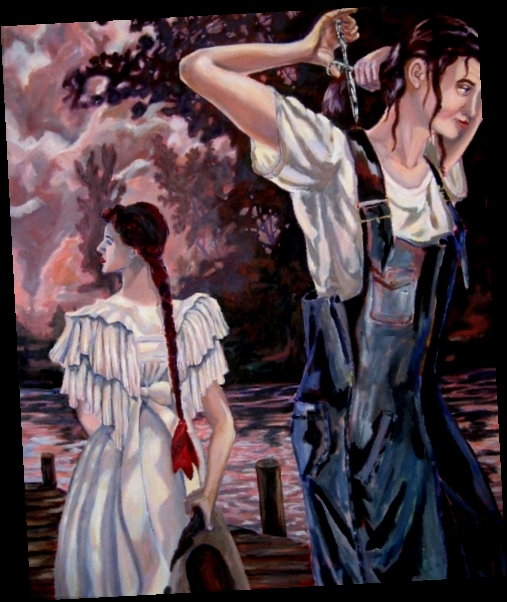
Both women in this portrait share the same name: Louisa Fletcher. It is a name that generations of other Fletcher women also bore. Toward the end of the dock the elder aunt is dropping her "shabby old coat" - a metaphor of her past grief expressed in her most famous poem written during her divorce from Booth Tarkington:
"I wish that there were some wonderful place Called the Land of Beginning Again, Where all our mistakes, and all our heartaches, And all of our poor selfish griefs Could be dropped like a shabby old coat at the door, And never be put on again."
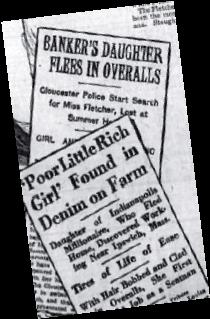
She is seeking a new beginning as is her runaway neice seen in the foreground. The aunt has her back to the viewer displaying her signature long Victorian braid and dropping the shabby old coat. The landscape is otherworldly as there is no such place as the Land of Beginning Again. You cannot escape your past and remain yourself. The younger Lousia has just been expelled from a second school in 1920. In contrast to the pose of her aunt, she has her back to her aunt, is committing the then daring and shocking act of chopping off her hair and disguising herself as a man. She is about to steal a boat and ride the river to cast off the legacy of her name and family to live under the alias of Willie Sullivan. Like her mother and grandmother before her and her brother after, she will soon die young. The building clouds symbolize the change and turbulence everyone faces when choosing a new course for their life to follow.
All paintings on this site are by the author.
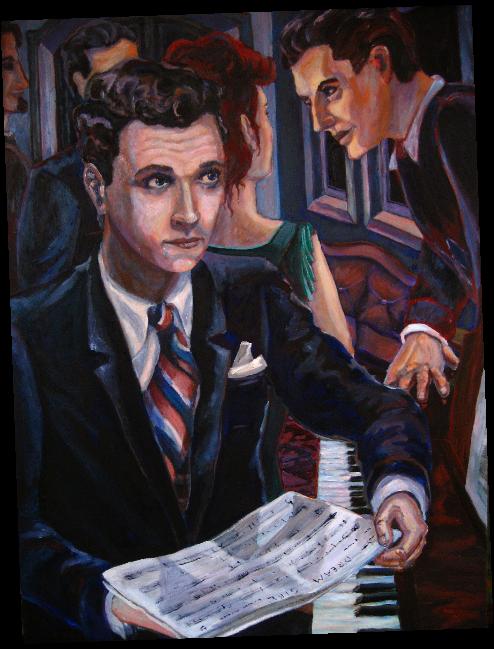
Below: Bruz and Casey Entertain circa 1929. | ||||
 | ||||
| | | | |
 | |||||
 | |||||
 | |||||
| | | | | |
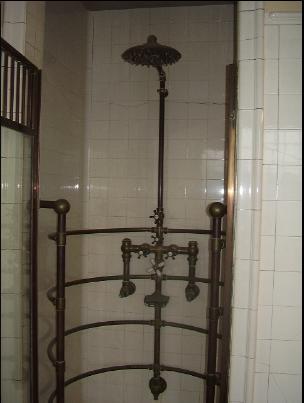 |  | |||||||
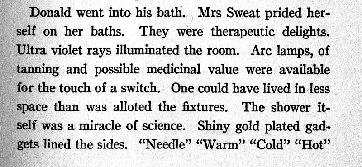
Laurel Hall images courtesy of Janis Baker. May Fletcher's infamous bathroom that terrified Ladywood pupils.One wrote me: "I graduated from Ladywood High School in 1968. . In a moment of nostalgia this afternoon I googled the Fletcher Mansion and came across your site. I've had a wonderful time remembering the facts and legends of the place. And was thrilled to find the picture of the shower! I still remember being a little bit scared of it the first time I used it. Now I have proof to show my family." Below: The shower scene from Beginning with Laughter in which Bruz recreates his mother's bathroom and terrifying complex shower. I wonder how many times he was scaled at Laurel Hall as a boy? The butlers in his stories and songs are never to be trusted but are alluring none the less. | ||||||||
 | ||||||||
| | | | | | | | |
 | ||
| | |
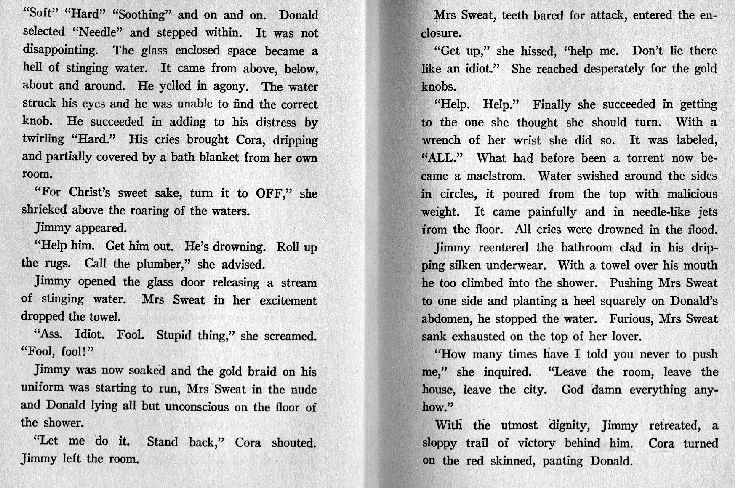
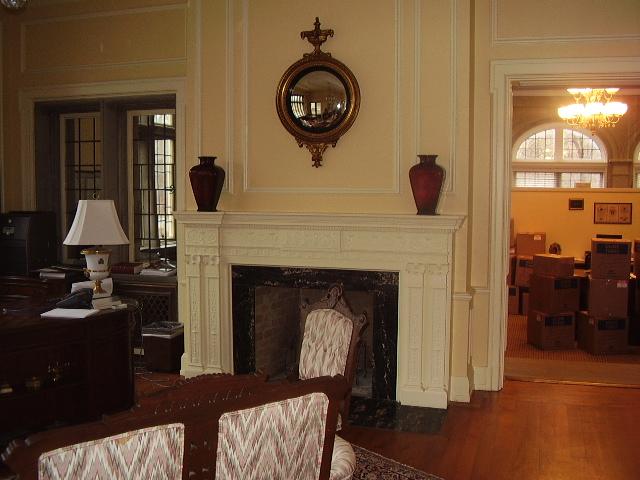
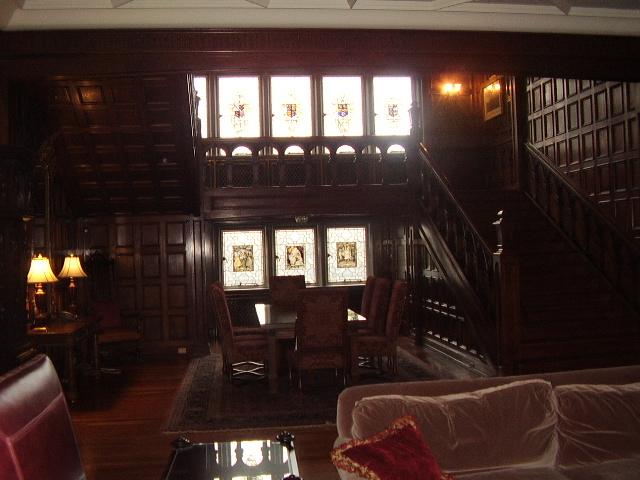
More images of Laurel Hall from Janis. Bruz's Music Room today, the grand staircase. | ||
| | |
 | ||
| | |
 | ||
| | |
 | ||
| | |
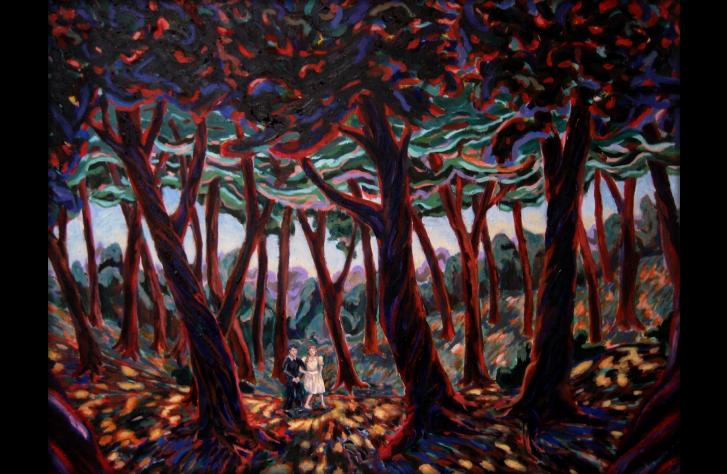
These children are Bruz Fletcher and his cousin Laurel running away from home at age 8. They pretended that they walked all the way to Indiana from New York City and maintained their story to the frustration of the police that found them. Complex, irregular patterns and rhythms of trunks, leaves, shadow and light are abstracted and simplified into color and brushstroke. Stylization replaces detail and celebrates the phyiscal paint itself. Paint is not made slave to replicating realistic and exhaustive details of an actual forest. The creative application of paint evokes the feeling of dense woods in a way that also egages the viewers' own imaginations. | ||
| | |
 | ||||
 | ||||
| | | | |
 | ||
| | |
 | ||||||
 | ||||||
| | | | | | |
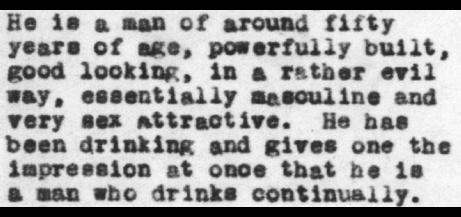
- from Bruz Fletcher, Beginning with Laughter [Alfred H. King, New York, 1932] Nottavinsky's manager wirelessed from the high seas concerning the music. It seemed that his charge was very eccentric. The national Russian anthem was to be played by full orchestra and six added violas upon her entrance. This was immediately to segue into an arrangement for three flageolets, drum and muted trumpet. After these two musical delights had been dispensed with, a slow and voluptuous waltz, by name La Femme de la Nuit, the score of which he, the manager, was bringing with him, was to form the background for whatever Madam decided to do. It was impossible to state in advance just what she would do. Nottavinsky was a genius and a genius of a rare and dying order. Madam was inspirational. At the oddest moments a mood would strike her and all that had been rehearsed would be abandoned for the "great urge" which swept through her "lithe and feline body." For this reason, and as a result of two rather disastrous performances in London, one of which royalty had graced and Nottavinsky had disgraced, no rehearsed program was ever announced. Just Nottavinsky in "Reactions." The best one could hope for was that her "Reactions" would be pleasing. The Russian national anthem proved rather a bore. There were, roughly speaking, about two hundred of these. With the downfall of each ruling house of that country came the birth of a new anthem. Which one of the many Nottavinsky preferred was hard to surmise. The orchestra leader decided, to be safe, to make a pot pouri of as many as time would allow. Even that could not be determined for the wireless had stated that Madam would enter according again to her "Reaction." If they saw that she started across the floor languidly, they would judge their tempo in accord. If, as had been discovered in the past, she started with animation, they would qui vive and leap musically into a gallop. Furthermore if the first movement commenced and then changed to the second midway through the hall, they would please be so kind as to follow. Madam was exceedingly temperamental concerning her music and the loss of a single flute peep or off rhythm low tuba note was enough to send her shrieking from the salon. | ||
| | |
 | ||
| | |