Bruz Fletcher Project: Remembering a Gay Voice | ||
 | | |
Bruz Fletcher: Family Home, Casey & Sources | |
| |
 | |||||
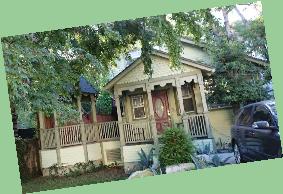 | |||||
Bruz and Casey's 1929 LA home was a a well known salon for artists of all kinds. They were prominent members of the film colony's so called "Fourth Dimension" Pic by Bad Mouse Orchestra | |||||
| | | | | |
 | |
| |
 | |
| |
 | ||
| | |
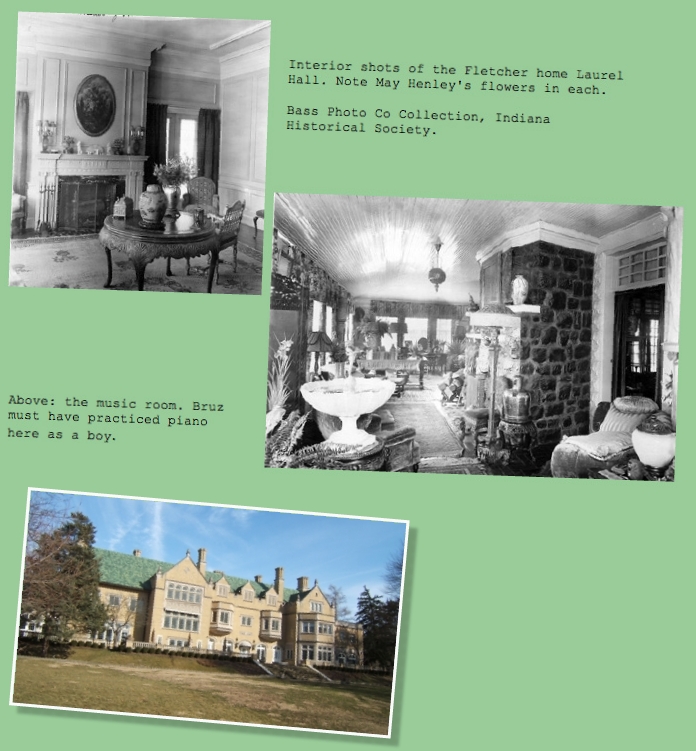
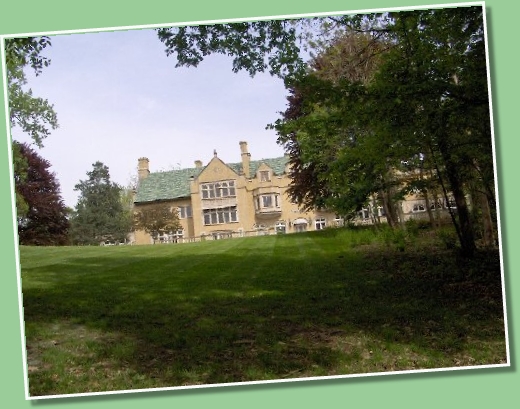
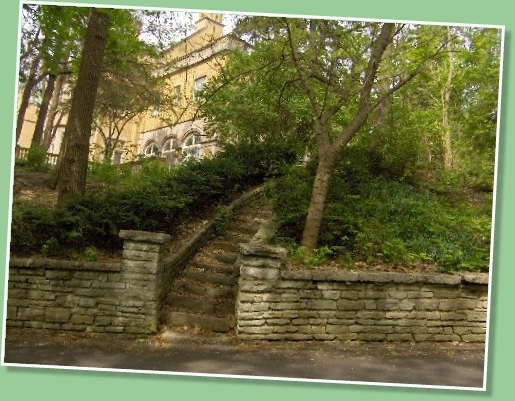
Photos of Laurel Hall by William R. Weakley & Dan Guio | ||
| | |
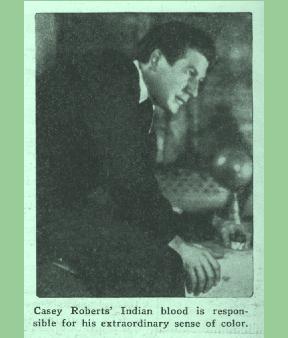
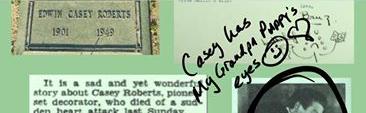
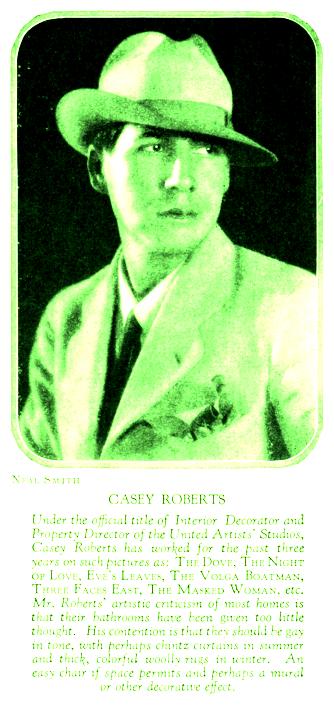
CASEY ROBERTS Remembering a Queer Eye: Edwin Casey Roberts was born May 9, 1901, and may have been of distant Native American descent on his mother Aba Uimin "Minnie" Chilson's side. His paternal great-great-great-grandfather Cornelius Roberts was killed and scalped by the Cherokees on June 24, 1788, while hunting ginseng on Black Mountain, now in Harlan Co, KY, but then part of Virginia. Casey's father, Archibald White Roberts, moved his family from Wayne Co, IL, to Tucson, AZ, between 1905-1910, and as early as 1910 according to census reports Casey was employed as an "office boy." Then Casey moved to Los Angeles where the handsome teenager began his career as a silent film actor in 1917’s Jilted in Jail. In 1920 he was working as a jewelry salesman and living alone at 147 1/2 Ridge Way. In 1921, his family finally followed him to California from Arizona.
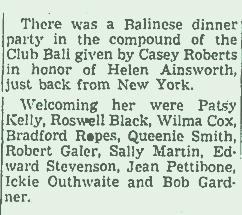
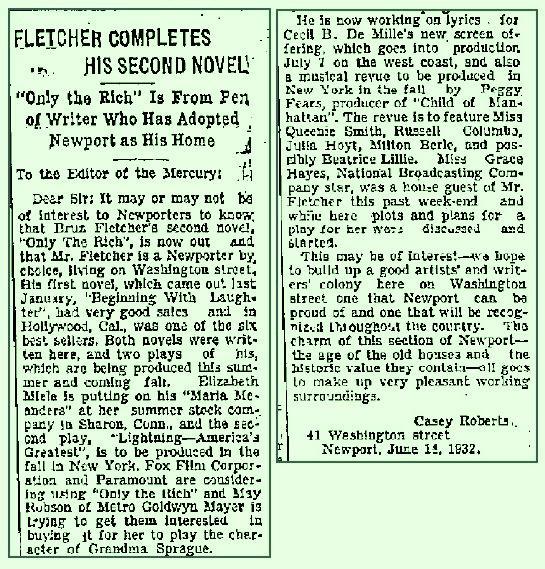
Casey was multitalented and was known as set designer as well as an artist. In the late 20's he designed sets and costumes, opened and antique shop and really started the English Village in LA, and sold his beautiful etchings in a gallery next to his shop. In the early 30's he tried a career as an artist. He and Bruz lived in Newport, Rhode Island’s artists colony in the early 1930’s. Their waterfront view address at 41 Washington Street was named Falsneau House. Casey wrote, “ we hope to build up a good artists colony here on Washington Street, one that Newport can be proud of and one that will be recognized throughout the country. The charm of this section of Newport - the age of the old houses and the historic value they contain - all goes to make up very pleasant working surroundings.” At the 1932 “Old Port Days” festivities, Washington Street houses celebrated their Colonial roots and were opened to the public. Bruz and Casey participated in the festivities, “ Falsneau House: Here were seen the paintings of Casey Roberts, World War posters, photography, and fishes from all over the world, and a Theives’ Market outside disposed of a large number of articles. Bruz Fletcher, writer and photographer, lives with Mr. Roberts and their interesting apartments were shown. The fish, in every form, were described in original verses by Mr. Roberts.” Bruz and Casey often played hosts to visiting theater people including Morton Downey and Grace Hayes.
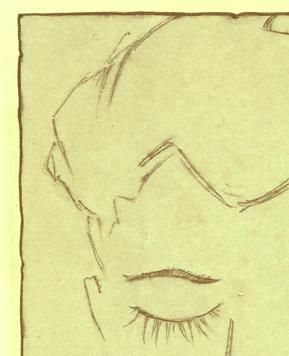
In 1930 Newport’s Casino Theatre featured his explorations in silver leaf techniques, “The Silver Shawl’ and ‘Black Panther’ show both taste and a sense of fantasy. Perhaps one of the most interesting pieces in the exhibition is his ‘Crying Negress’. It has unusual power and feeling. In it, his treatment of line is handled with a sinuous beauty that shows that this artist ‘thinks of line as a musician thinks of timbre, as a medium capable of infinite gradation.’” His open form line drawing of Bruz used as the bookplate of Bruz's first novel has a very organic quality to the line but in sharp contrast for the cover of that same book, Casey employed a sort of fluid and lyrical line that appears somewhere between the two styles of Art Deco and Surrealism.
Casey showed work at the AIC in 1931, his decorative drawings were displayed at the Four Fountains in South Hampton in June of that year followed by inclusion of his “vivid and original paintings” in July’s Newport Art Association Annual Show. He presented paintings at the Robert C. Vose Jr. Galleries in Boston with black sculptor N. Elizabeth Prophet in November of 1932. Articles describe his artwork alternately as "modernist decorations,""fabric pictures," "ragbag pictures - the very amusing collections of odds and ends which Casey Roberts contrives into irreverences include this year a new view of Rockefeller plaza 'Prometheus,' a still-life with a button eyed fish extensively dead; a hilarious gangster's funeral with a gold lined coffin and a veritable arsenal; and a bull fight Mr. Hemingway did not see." On reviewer wrote, “in looking at the panels of Casey Roberts, one is lead to hope that nothing will hinder the future development of a man who in the twenties is already capable of such intellectually good work. It is clear in these panels that the mind as well as the hand have been at work. His sense of climax and decorative instinct are so unusual.” His 1934 entry in the Newport Art Association Exhibition was a canvas entitled “Summer Sailing.” He entered still-life work into the 1934 Newport Flower show and won first prize for a shadow box. For some reason (perhaps bankruptcy?) the sheriff was auctioning off 22 of defendant Casey Roberts' pictures in New York on Jan. 4, 1935.
While in Newport, Casey also staged parties. He painted the scenery for the the 1934 President Roosevelt Birthday Ball which included a faithfully executed replica of the White House that was complete to the minute details. So impressive was it that it was saved and reused to decorate the 1936 Army and Navy Dance. Along the walls of the birthday ball were fir trees with asbestos cotton representing snow and overhead were stung illuminated balloons while between them were huge clusters of white balloons which were released at intervals during the evening. His over the top sense of detail would later serve him well in Hollywood.
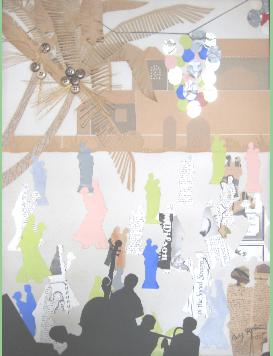
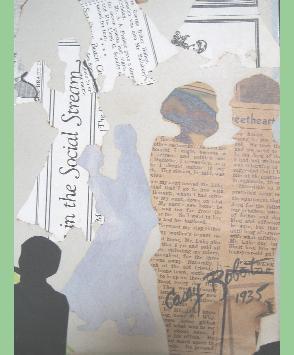
Those first few months of 1935 found Casey (and Bruz as least in part) in Palm Beach and on the society pages attending gala dinners, costume balls and staging parties. His surviving 1935 collage captures those days and is quintessential Casey style. It is a society ball, with silhouetted dancing figures fashioned from clippings of the Society Pages and colored paper repeated throughout. Large palms with button coconuts and strung with festive balloons are overhead and off in a corner out of the “Social Stream” is a totally a unique couple made from text of a story of illicit love. Casey’s sly sense of irony and social commentary is ever-present even in this decorative work.
Casey is best remembered as a successful Hollywood set decorator and was nominated for 3 Academy Awards for his work. He worked on Ingrid Bergman’s first American film Intermezzo - A Love Story and she on his last Joan of Arc. His specialty seemed to be in the details. He used young tumble weeds to decorate Jackson or Pirate Island in The Adventures of Tom Sawyer because they were so tough and would retain their green color long after other plants faded but overnight filled the set with jungle of several tons of freshly cut trees and greenery. He scoured museums and private collections for the implements of torture in James Whale’s The Man in the Iron Mask, and used rare period antiques and real 19th century books rather that the typical law books to create the library for Little Lord Fauntleroy. He dirtied sets to make them look lived in and refashioned the surviving soup cans from his devastating fire into a decorative floral wall hanging and placed it prominently on the Intermezzo set.
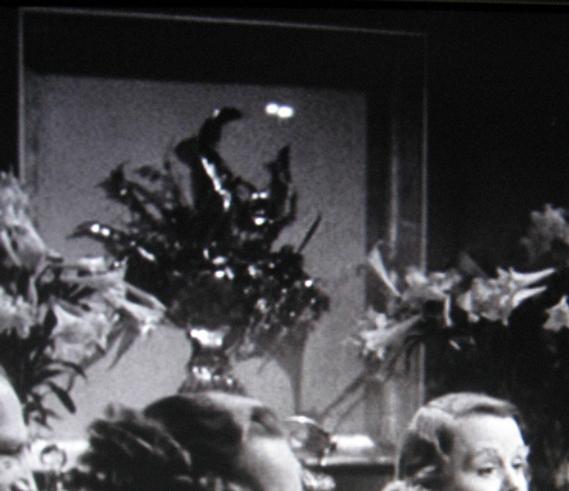
Just as clever and brazen as Bruz was with his lyrics, Casey decorated film sets with a bold lavender touch that went beyond his over the top floral bouquets. For instance, in Intermezzo Casey placed a wholly unnecessary, full frontal nude MALE sculpture on the windowsill. Its white porcelain form against the white drapes did not immediately steal attention from nearby star Leslie Howard. Its camouflage kept it invisible to most viewers but a discerning queer eye finds this incongruous and gratuitous erotic element totally distracting. Its pose, just turned away form the camera enough not to expose its genitals, is a complete and surprising tease. Casey accomplished in a visual way exactly what Bruz was doing onstage, flaunting his sexuality in open but discreetly enough that only those who wanted to see it would.
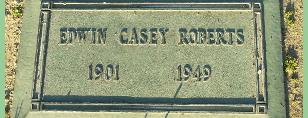
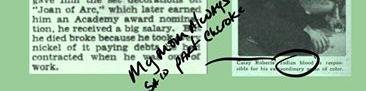
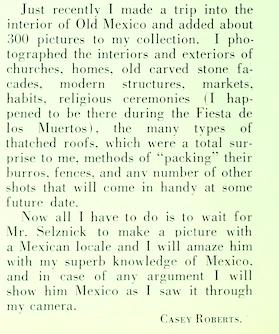
His father Arch wrote referring to Casey in 1939, "Our family is located here. Two of the sons are in state civil service. One is in the moving pictures, with some degree of success, and best of all are healthy and happy in their chosen work." But family members recall that some of the Roberts's siblings remained uncomfortable with his sexuality even long after his death. The American Institute of Decorators gave Casey a "special award citation" for his unusual imagination" for his work on The Secret Life of Walter Mitty in 1947. His name often appeared with Bruz's in the society and gossip columns. Casey wrote and appeared in a number of detailed articles about his work at a designer that a fascinating behind the sceens look at filmmaking, his creative sensiblities, work ethic and phenominal eye for detail. Casey died of a heart attack in 1948. He was broke in spite of having just earned a large salary for "Joan of Arc" as he had incurred much debt while out of work between jobs. He had been living at 1139 Larabee Street in West Hollywood. A cousin kindly emailed me the family history, a few Fletcher Family/Laurel Hall articles and the following obituary:
Wayne County Press, June 2, 1949, p1, c6:
CASEY ROBERTS DIES
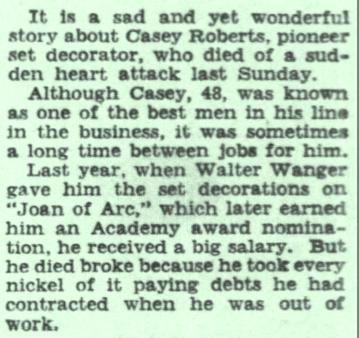
News of the unexpected passing of Casey Roberts in Hollywood, Calif., was received by relatives here Sunday afternoon. Mr. Roberts' father, Arch W. Roberts, of North Hollywood, Calif., had arrived in Fairfield only two days earlier for a visit with his sister, Mrs. O. A. Towns. He left for California by plane from St. Louis early Monday morning.
According to the telephone message received, Mr. Roberts had just returned from a business trip to San Francisco when he suffered a stroke of apoplexy and died. He was 48 years old. He was born and reared on the old Roberts homestead in Jasper township, near Fairfield. While a young man he moved with his parents to California.
In recent years he had advanced to a position of prominence with the large movie studios in Hollywood as the director and arranger of properties used in making pictures. A few months ago one of the Los Angeles newspapers carried his picture and a lengthy story about his work in connection with the filming of the new picture, "Joan of Arc." Mr. Roberts was never married. He leaves his father; a stepmother, the former Virginia Marshall of Fairfield; two brothers and three sisters.
Georgia Cravey comments: "The line 'he never married' is somehow so sad in what it leaves out. Oh the times!" Today, Bruz Fletcher is listed as the partner of Casey Roberts in the detailed Roberts Family . | ||
| | |
 | ||||
 | ||||
| | | | |
 | ||||
 | ||||
| | | | |
 | ||||||
 | ||||||
 | Comments from Casey's great-niece. |  | ||||
 | ||||||
| | | | | | |
Below: A collage from Casey's series of "Button Pictures" | ||
| | |
 | ||||
 | ||||
| | | | |
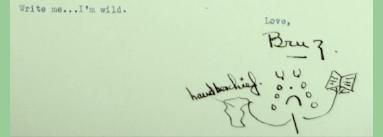
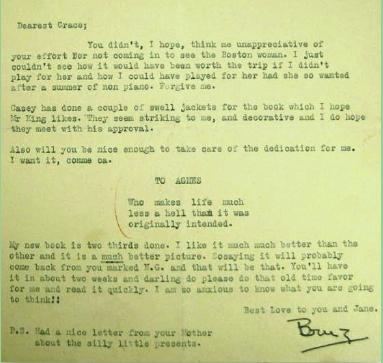
Casey writes a letter about Bruz. He wrote several detailed articles about his work in films | ||
| | |
 | ||
| | |
 | ||
| | |
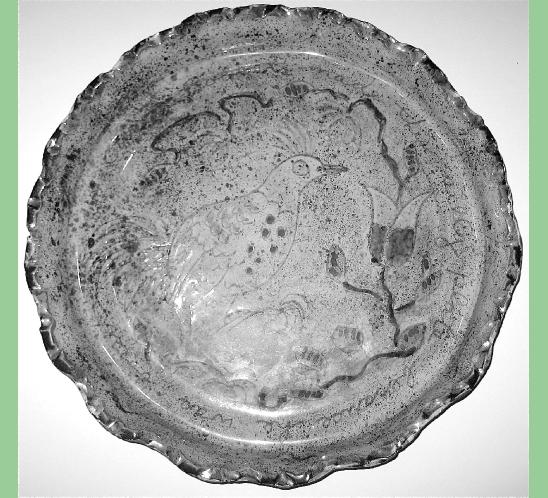
Metal collage made from the debris left after the home of Bruz Fletcher and Casey Roberts was destroyed by fire. Below: ceramic plate decorated by Casey Roberts. It reads: Casey Roberts made this silly plate because he was bored. 1948. | ||
| | |
 | ||
| | |
 | ||
| | |
 | ||||
 | ||||
| | | | |
 | ||
| | |
 | ||||
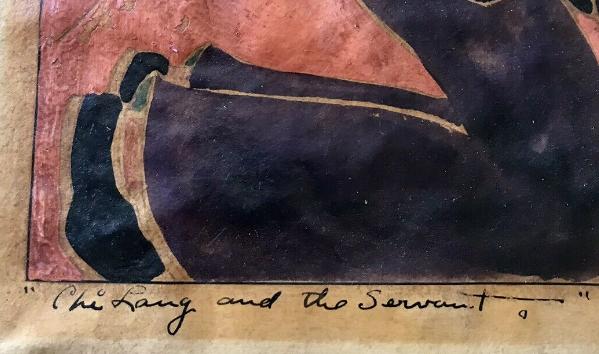
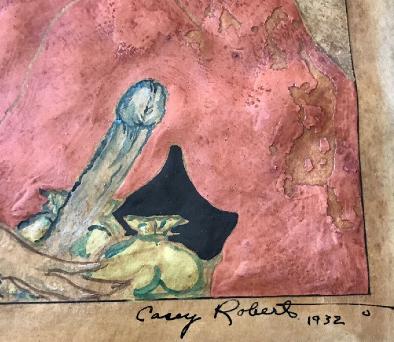
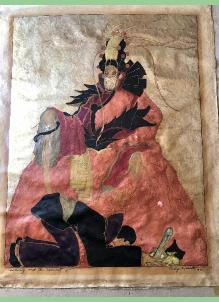
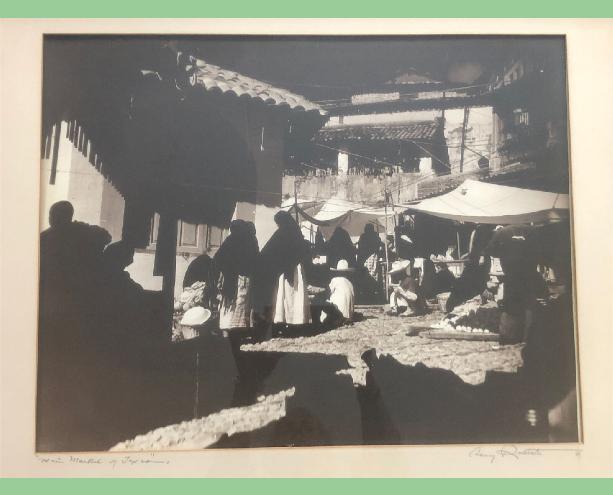
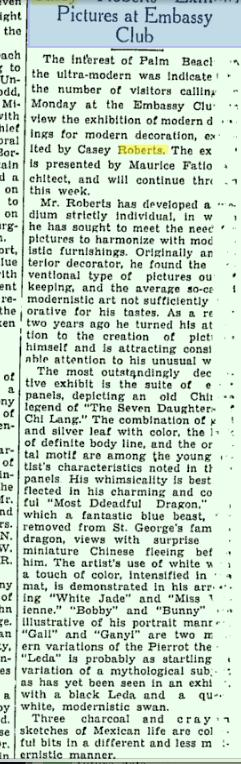
Articles describing both the painting of Chi Lang and photo of Taxco above by Casey Roberts are found at the bottom of this webpage. | ||||
| | | | |
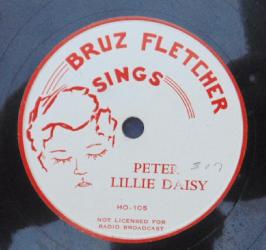
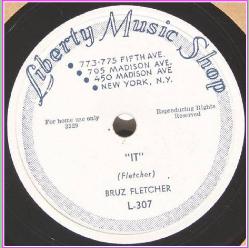
FOR THE RECORD Bruz is pronounced to rhyme with "buzz" or "does." One 2017 book incorrectly claimed the pronouciation was like "Bruce!" -as did a 2021 video series. Nor did Fletcher perform prancing around flouncing a purple cape. That is more like something I might do, not Fletcher. Bruz Fletcher never owned or ran a gay nightclub called "Bruz Fletcher's" in Los Angeles as is reported in several recent books now. As best I can tell, the origins of many misreporting of that fact is the valuable series of interviews with David Hanna published by the Harvard Review. Many decades after it was closed, Hanna mis remembered the Bali as being Bruz's own place. The neon side outside the club did spell out his name and the Bali was often refered to as "Bruz's" in the press and as common usage. But he never had his own place. After 2000, some of the first writers to mention Bruz in books and a few websites looked to Harvard Hanna interviews as one of the few and best first hand sources that described 30s gay life in Los Angeles that was widely avialble. Writers have since based new work on mistakes printed previously and that misinformation is now widespread. But Fletcher never had his own club. However, the Bali SEEMED very much like his, and for all intents and purposes functioned as if it were. Frances Faye recorded "Drunk with Love" 4 times. By the time she recording for Capitol in the early 50's 78 rpm records were on the way out. Her 1946 recording on International was already somewhat obscure and "Drunk with Love" was already a major staple in Lesbian bars like Mona's. It was very shrewd and calculating of her to re-record it and reach out to that audience the song,s underground appeal. Those in the know would recognize what she was declaring by including it. Even the liner notes called it "daring," but declined to say why. She also recorded the song as part of an unreleased demo albu m just before the Capitol releases. Her final recording was a live version on her most popular recordng "Caught in the Act." It became a staple of her many apperances and 2 other live bootleg recordings of the song are known to exist. Actress, Pat Bond recited the entire lyrics to "Drunk with Love" in her 1981 interview with Alan Berube for the GLBT Historic Society WWII Oral Histories. She said, " and then another one I like a lot- we all liked was "She likes me drunk with love...that's one of our favorites. All that masochistic- well, ballads are still that way, aren't they? Very masochistic." She also rememberd Carol Davis who preformed in clubs then, and on occassion Bruz Fletcher's material as he did in the film "Before Stonewall. She described in detail Mona's Candelight where Miss Jimmy Reynard also performed "Drunk with Love." It combined with the Hanna interviews are great firstand descriptions of a lost world. I need to debunk a myth I accidentally started. There are 2 recordings of Bruz Fletcher singing "Peter Lilllie Daisy" as it was called on Bruz Fletcher Sings or "It" as it was named in the Liberty Music Shop recording. Usually there are lyric variations in his multiple recordings. It is a long story how I got the "New York" version of the lyrics and came to believe they were sung in one of Fletcher s recorded versions. But in anycase I was mistaken and Fletcher never wrote or recorded New York lyrics for the finale of the song. My bad entrirely. | ||
| | |
 | ||||
 | ||||
| | | | |
Archive Contents All of Bruz Fletcher's known recordings and alternate takes; novels Beginning with Laughter, Only the Rich; short story Out of Town Flyer, script The Greater Thing; sheet music to 14 Fletcher songs including 10 never recorded; over 1000 pages of correspondence with institutions, research collegues and professionals, Fletcher and Roberts family members, associates and others regarding research and discovery; hundreds of articles and clippings concerning Fletcher, Roberts, the Fletcher Family and friends of Bruz Fletcher; Collage,Photo,Painting and Ceramic original artwork by Casey Roberts; Letters written by Bruz Fletcher; Hi Res scan of bookplate portrait of Bruz Fletcher by Casey Roberts; all known recordings of Fletcher songs by other artists; scripts and screenplays for projects about Bruz Fletcher; Liberty Music Shop ephemera; books that Fletcher is mentioned in; death certificates and other legal documents; letters and data pertaining to Fletcher and Roberts from the papers of various Fletcher associates from colleges and libraries; genealogical info, photos and documents of Fletcher and Roberts; Fletcher and Roberts family photos, photos and research of Laurel Hall and Crown Hill; "screener copy" of 1937 short film with Bruz Fletcher; Ephemera, research and imagery of the Bali and other nightclubs Fletcher appeared at and other gay gathering spots; Hi Res versions of all images; and other misc items.
ACKNOWLEDGMENTS
Thanks to David McCain for sharing what he had, for the first Vaudeville info and for looking out for Bruz mentions and articles as he presses on with his Boswell research. Thanks to Georgia Cravey and Chris Marshall of the Marion County Public Library for sharing Bruz's novels , bookplates and images, articles, obituaries, and reviews. Thank you, Georgia, for all your continued collaboration and enthusiasm. Thanks to John Fletcher and other members of the extended Fletcher Family for sharing info, photos and memories. Thanks to the family of Casey Roberts for sharing his family story and supporting this site and research. Additional thanks to: Randy Riddle Charles Cage David S. JD Doyle of Queer Music Heritage, a collegue and collaborator on many projects, who gives so much. Stuart Timmons for his interest, researching and editing help, appreciation and support. William Weakley and Dan Guio, both of whom are Laurel Hall neighbors. Greg Haynes of A Rare Read for his image. Many at the Library of Congress
Copyright Tyler Alpern 2004 - 2026 The website's content is copyrighted. No material from the site may be republished, copied, posted, rewritten, printed, photocopied, broadcast, publicly displayed, or distributed in any way without prior written permission except that you may view many of the site's pages with a web browser and you may print a single copy of those pages for your personal, noncommercial, home use. Markers in text to protect IP, so ask permission before using.
Bruz Fletcher: Camped, Tramped & A Riotous Vamp is the title of the new Bruz Fletcher book available only here. Email for details. It contains the fruits of 8 years of exhaustive research including: heaps of unpublished images, Bruz Fletcher's extended and fascinating biography, analysis and commentary of his work from both queer and straight perspectives, lyrics to 15 of his songs, Fletcher family history, contributions from family members, collectors, and fans, bibliography, research details and more. Interested past contributors to this site can receive a free collectors-only edition of the book.
| ||
| | |
 | ||||||||||
 | ||||||||||
 | ||||||||||
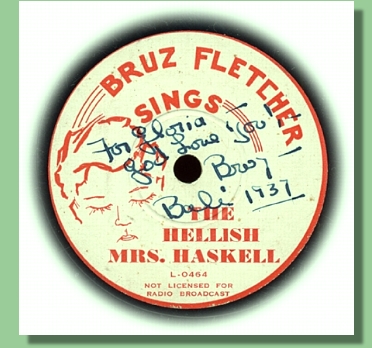 | ||||||||||
Casey's portrait of Bruz adorns the record label autographed by Bruz at the Bali. | ||||||||||
| | | | | | | | | | |
 | ||||
 | ||||
| | | | |
Casey designed the covers for both Fletcher's novels. | ||
| | |
 | ||||||
 | ||||||
 | ||||||
| | | | | | |
 | ||
| | |